If you are preparing for a business trip to China and search for hotels on the international booking platforms you normally use, you may notice something odd: China is such a large country, so why are there so few hotels available?
On top of that, China’s digital payments are dominated by apps such as Alipay and WeChat, and there are specific rules for registering foreign guests at hotels, so booking a hotel can be more complicated than you might expect.
Don’t worry. Below, I will walk through these issues one by one, so you can prepare before you leave, choose a more suitable hotel, and get a better price.
Quick Conclusion: How Should You Book Hotels in China?
- For a simpler experience, start with Trip.com to book a hotel that accepts foreign guests, and confirm the final price, cancellation policy, and accommodation policy before checkout
- When booking budget hotels, independent hotels, or guesthouses in smaller cities, it is best to confirm first whether they can accept foreign guests
- You must bring your original passport when checking in (Hong Kong, Macao, and Taiwan residents should use the corresponding mainland travel permit)
- When comparing hotels, check guest reviews, whether free cancellation is supported, and whether prepayment is required
Why do I suggest this? Keep reading.
Why Do Some Hotels Refuse Foreign Guests?
In the past, hotels in China did need a qualification to receive foreign guests; but since July 2024, the government has officially issued guidance requiring hotels not to refuse foreign guests, so this restriction has effectively been lifted.
However, in some smaller cities, when booking budget hotels, independent hotels, or guesthouses, I still recommend confirming whether they can accept foreign guests first. The main reasons are:
- Policy implementation takes time, and some hotels have not completed reception training
- Registering foreign guests’ accommodation information requires special equipment and uploading it to the public security authorities
- Merchants worry about being penalized if the process is not handled properly
Trip.com usually states the types of guests a hotel can accept in its accommodation policy. Before booking, it is worth checking this item first—it can save you the hassle of negotiating after arrival or even changing hotels at the last minute.
If a hotel does refuse to accept you, contact the booking platform’s customer service first to coordinate a solution; if necessary, you can also call China’s police emergency number, 110, for help.
Why Do I Recommend Trip.com for Booking Hotels in China?
If you are a member of a hotel brand’s loyalty program, check the official website first for member rates and exclusive benefits.
Based on my comparisons across different cities, whether in first-tier cities like Beijing and Shanghai, or third- and fourth-tier cities like Guilin and Datong, Trip.com offers plenty of hotel options—this is one reason I recommend choosing Trip.com first.
Trip.com
Ctrip is China’s largest online travel platform, offering hotels, flights, train tickets, travel products, and many other travel services. It has long been an industry leader, with extensive resources for both international hotels and local Chinese hotels.
Trip.com is the online travel platform Ctrip created specifically for international users. Its main advantages are:
- It is backed by Ctrip’s local hotel resources, so both service and prices are more competitive
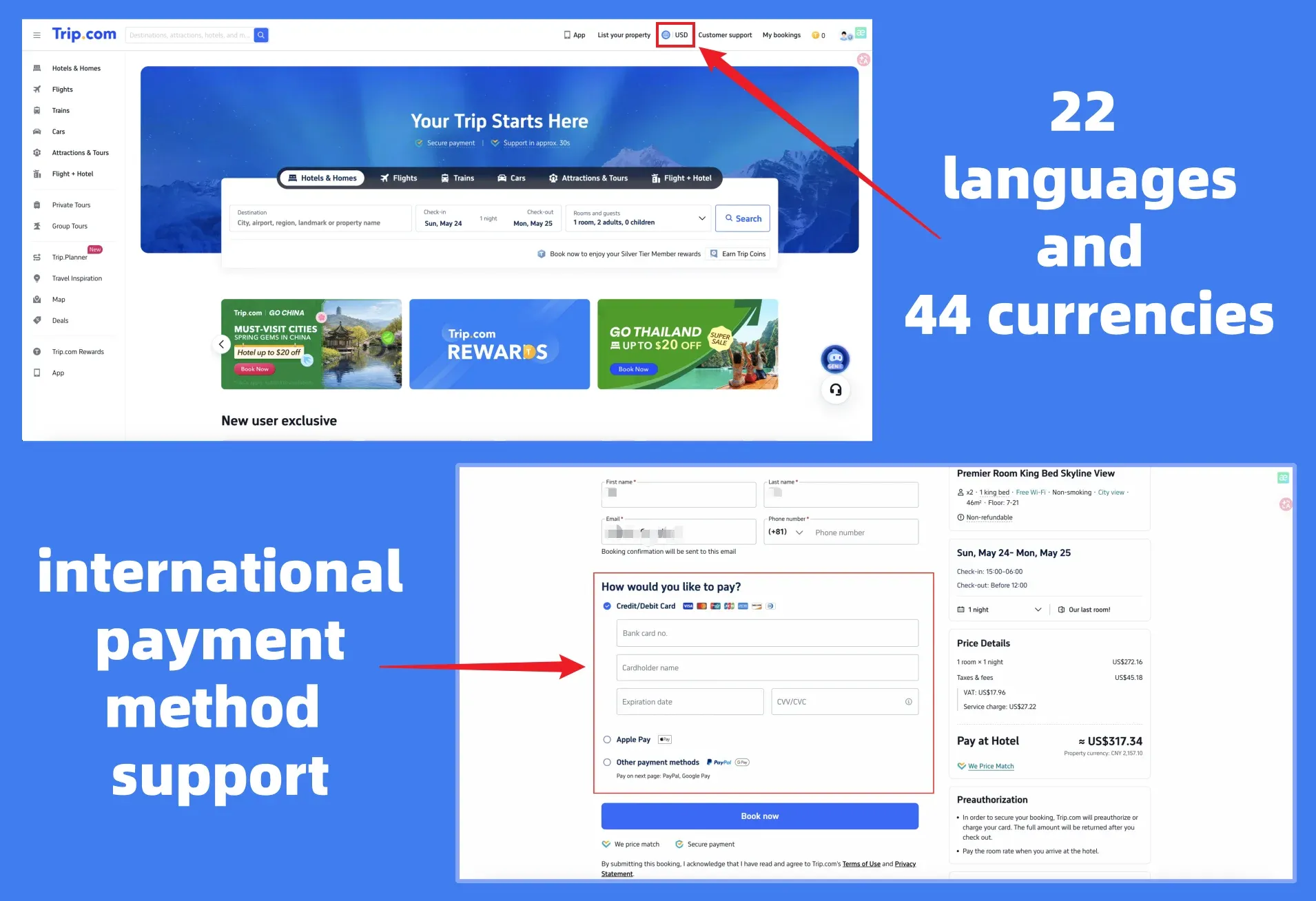
- It supports 24 languages and 44 currencies, and you can book online directly with major international credit cards
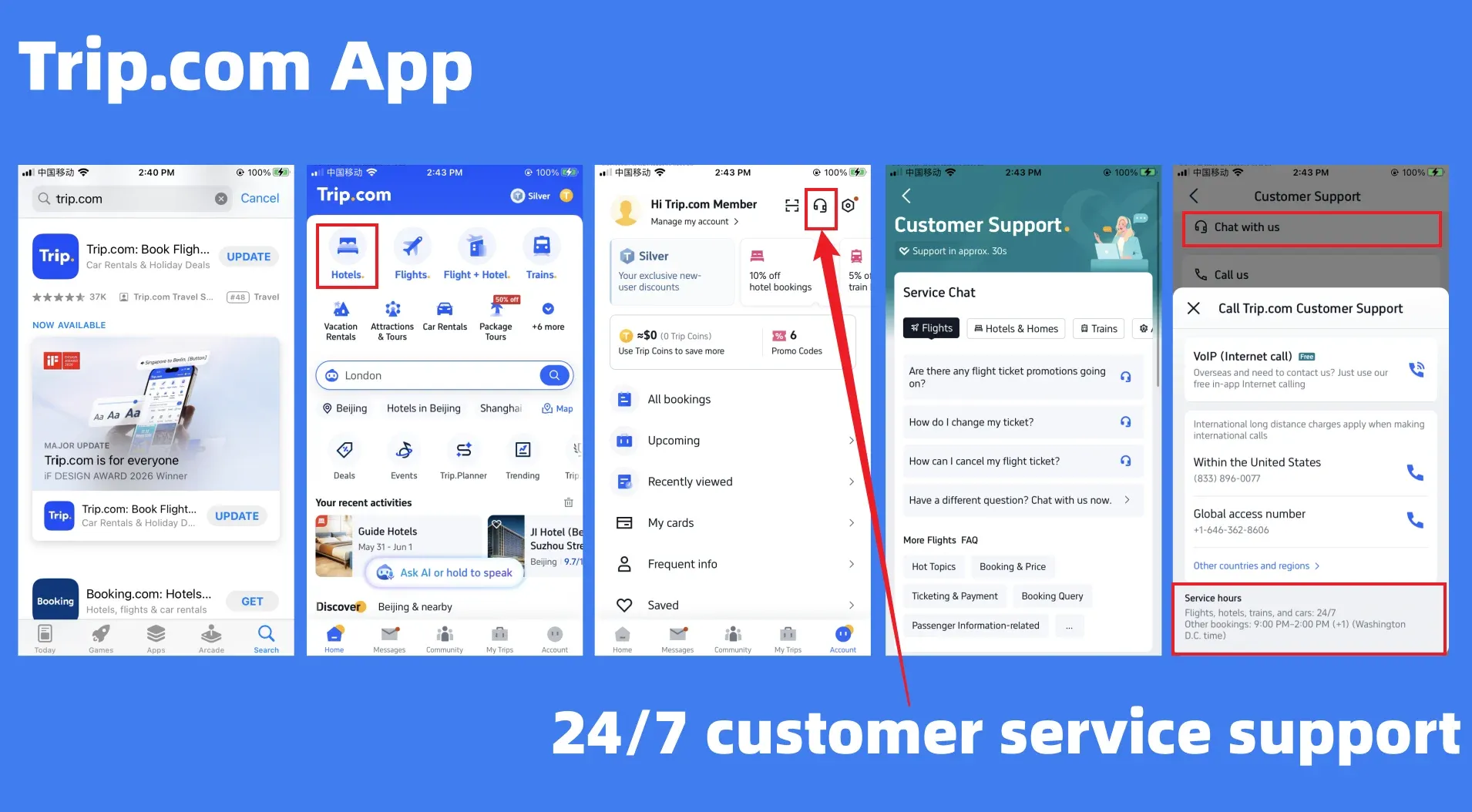
- It offers 24/7 multilingual customer service with real-time online chat or free phone support, and its local advantage means problems get solved faster
Once your city and check-in dates are set, you can book on Trip.com. Before checkout, remember to confirm the final price, cancellation policy, and accommodation policy.
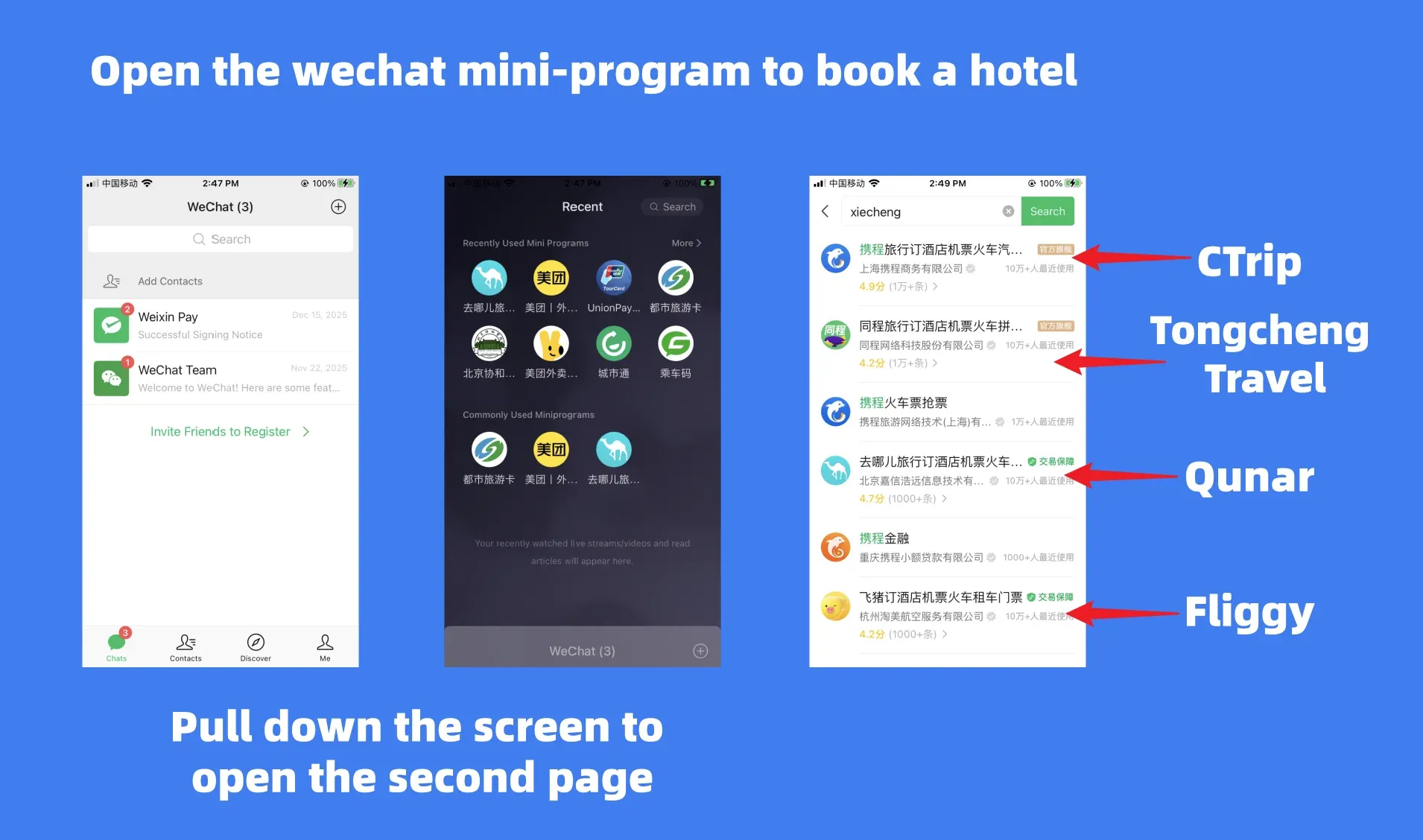
Meituan, Ctrip, Qunar, Fliggy, and Tongcheng
These are local booking platforms built for Chinese users, and they often have advantages in hotel resources and prices. But if this is your first time in China, I do not recommend making them your first choice for the following reasons:
- Limited English interface support
- Registration may not support international phone numbers, so you may not receive verification codes
- The payment system may not support your international credit card, so you need to register Alipay or WeChat before you can pay
If you will come to China often in the future, or want to find some niche design hotels, I can briefly explain how to use these platforms and how to solve the related problems.
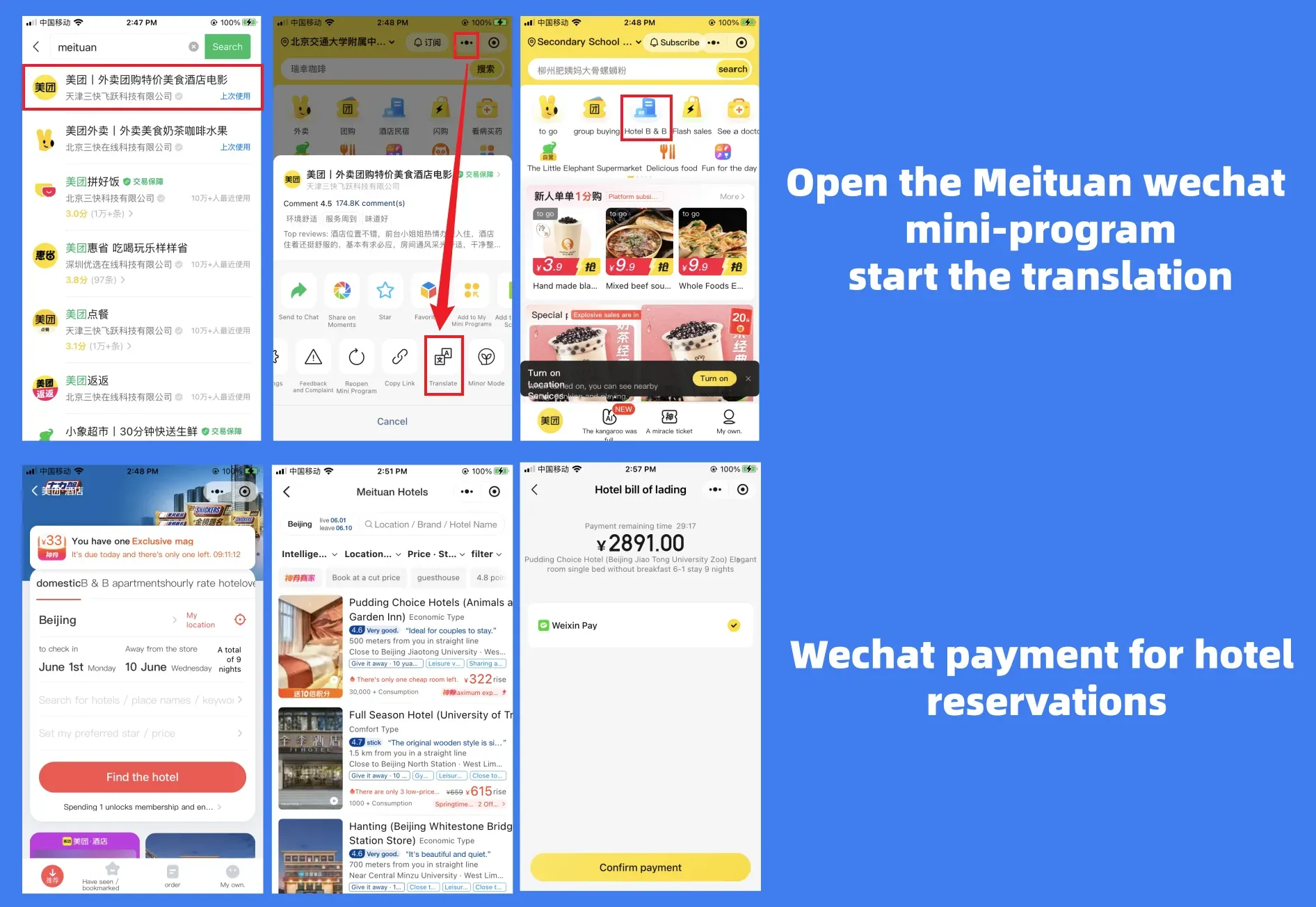
- You can book hotels through these platforms’ WeChat mini programs instead. A WeChat mini program runs inside WeChat and supports page translation, so language problems are mostly solved; but first you need to register WeChat and bind a bank card as your payment method.
If you are not familiar with WeChat, I recommend reading: WeChat Pay for Foreigners 2026: Set up with Visa & Mastercard
- Booking through WeChat or Alipay mini programs means you don’t have to worry about international phone numbers not being supported, because you can log in directly with WeChat or Alipay. But if you download the standalone apps from the Apple Store or Google Play, registration with an international phone number may fail, and you will need a Chinese phone number.
By now you have probably noticed that these problems are not easy to solve, and sometimes solving one creates a new one. If you want to spend less effort on language, payment, and after-sales communication, booking directly through Trip.com is much simpler.
How to Book Cheaper Hotels in China
-
Trip.com offers hotel deals, discounted room types, and flight promotions all year round. If your itinerary is already set, you can also look at flight + hotel package prices, which are sometimes cheaper than booking separately.
You can start with these deal pages:
-
Try to avoid Chinese public holidays. Holidays such as Chinese New Year, Labor Day, and National Day are peak travel periods in China, and hotel prices usually rise sharply.
-
Book as early as possible and choose rooms with free cancellation to avoid extra losses if your itinerary changes.
-
If you choose to pay at the hotel, note that some hotels do not support international credit cards; switching to WeChat Pay or Alipay usually adds an extra 3% fee.
For more about WeChat Pay and Alipay, you can read:
-
When booking, you can exclude room types with meals and handle breakfast yourself, which often saves some money.
-
Prioritize a location with convenient transportation rather than insisting on the city center, and prices will be much friendlier.
Step-by-Step: From Booking to Check-In
Step 1: Prepare Your Booking Information
- The guest’s surname and given name
- Email: used to receive the booking confirmation
- Phone number: for receiving notifications and staying in contact
- International bank card: used for online payment
Step 2: Choose a Platform
You can book through the Trip.com mobile app or its website:
Step 3: Search and Filter Hotels
- Search by city, location, hotel brand, check-in date, number of guests, and other conditions
- Then filter further by room type, guest rating, payment method, and whether free cancellation is available
- Combine the hotel’s facilities, nearby amenities, guest ratings and reviews, and accommodation policy to decide whether to book
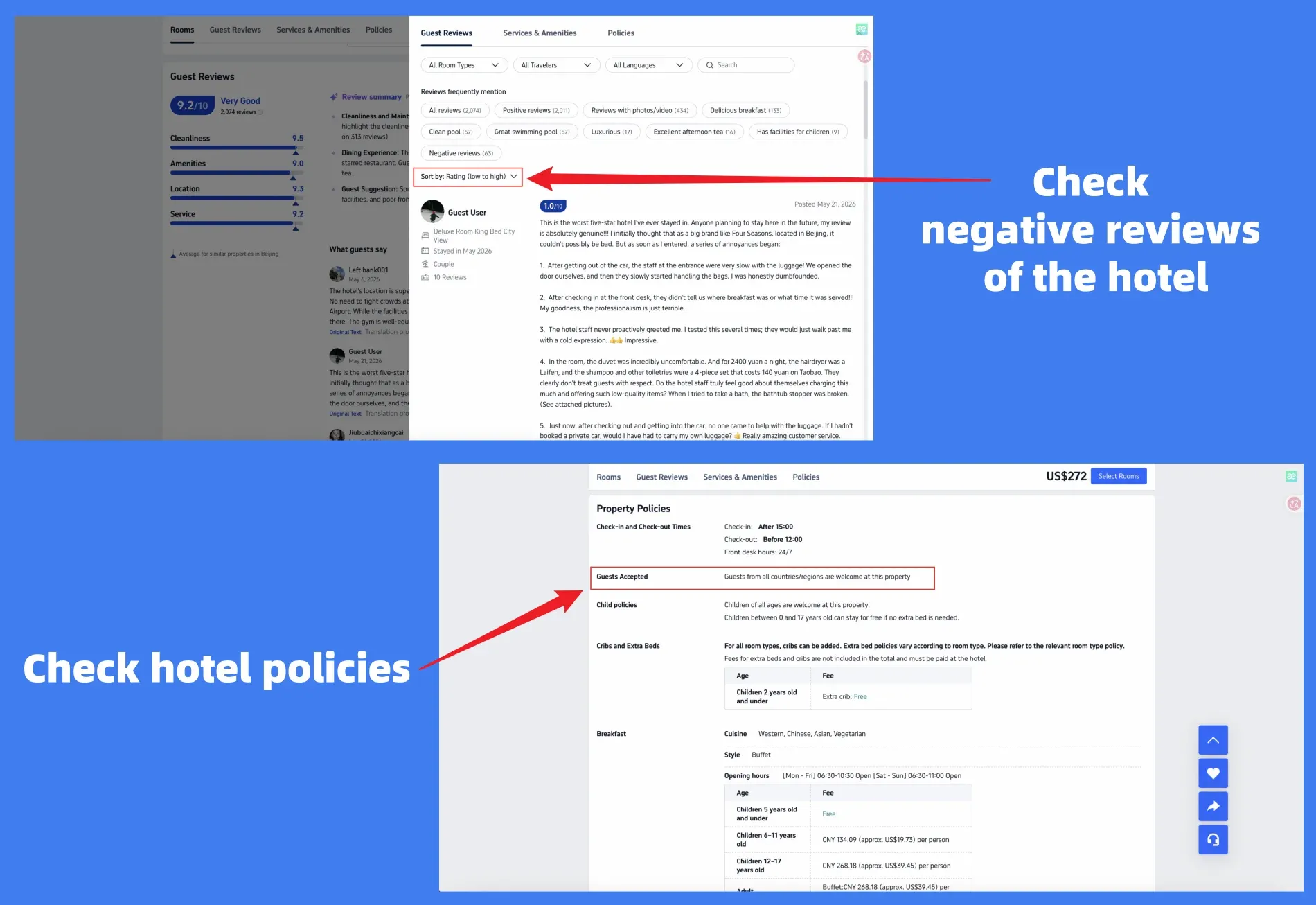
- Do not fully trust star ratings: China’s star-rating standards are not exactly the same as Western ones, and they usually focus more on facilities and hardware
- Pay close attention to negative reviews: look out for issues you care about, such as soundproofing, smoking, or renovation odor
- Trip.com’s accommodation policy states whether the hotel accepts foreign guests
Step 4: Book
- Fill in the information you prepared earlier
- If you have special requests (such as a high floor or a quiet room), you can add them in the notes
- Check the check-in dates, room type, total price (including taxes and service fees), and cancellation policy
Step 5: Check In
- Show your original passport and booking information; the hotel will register and upload your identity information
- The hotel may collect a deposit (refunded at checkout) and may not accept international credit cards, so I recommend preparing payment methods such as WeChat Pay, Alipay, or cash in advance
Recommended Hotel Brands
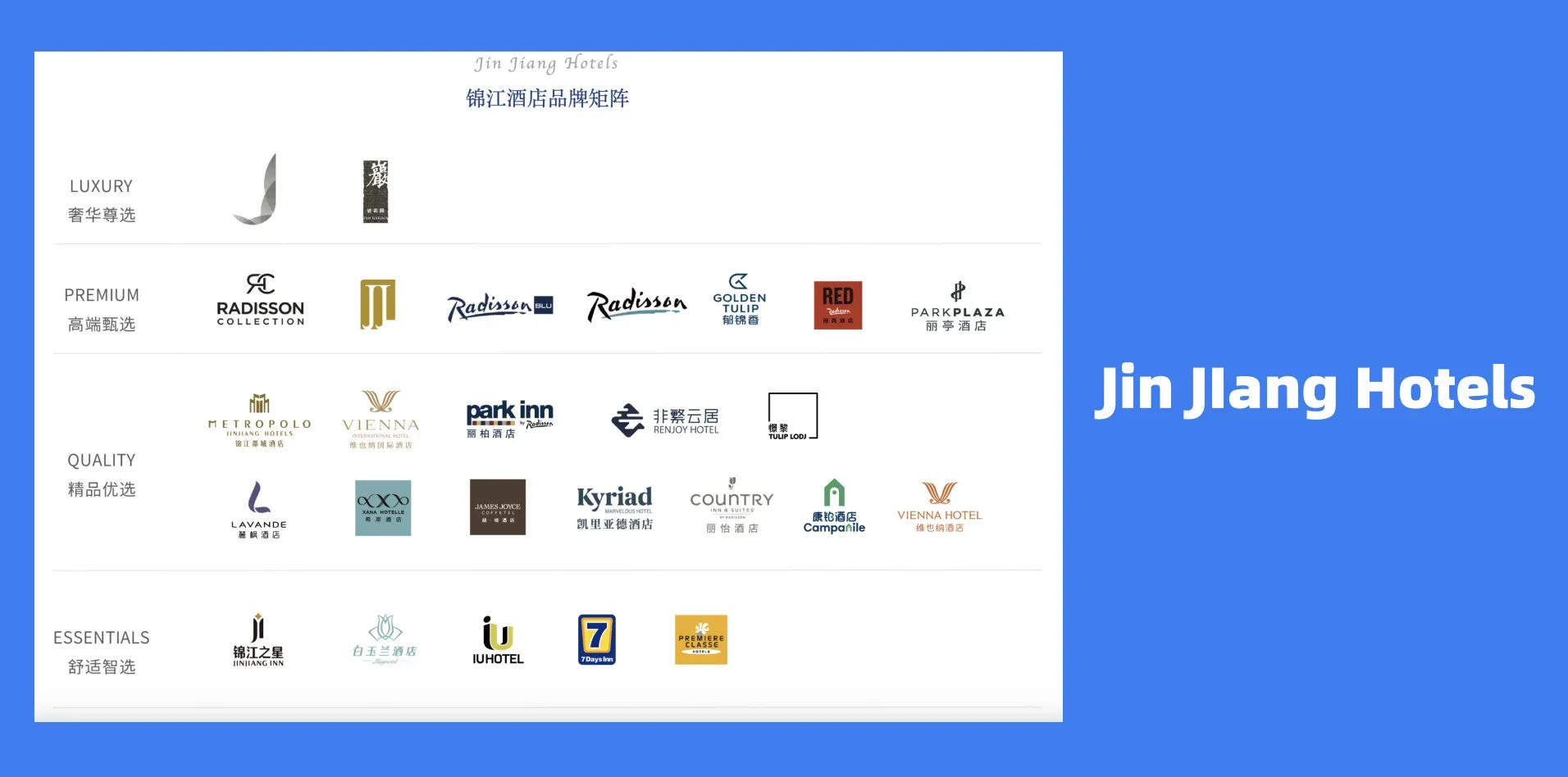
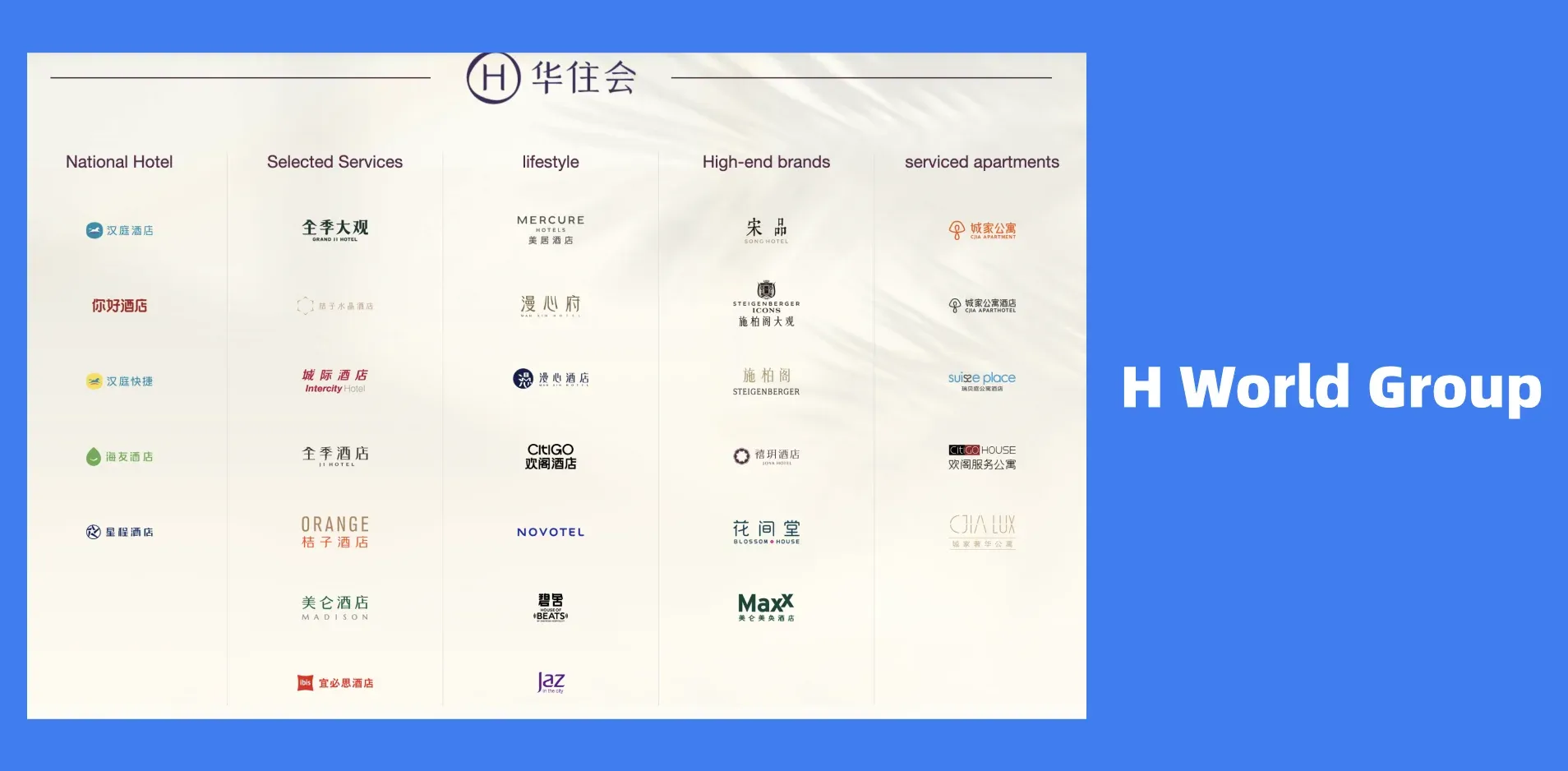
You are probably already familiar with international hotel groups, so I will not expand on them here. Let me focus on China’s four major hotel groups and their brands—click the links to visit their official websites and learn more: